


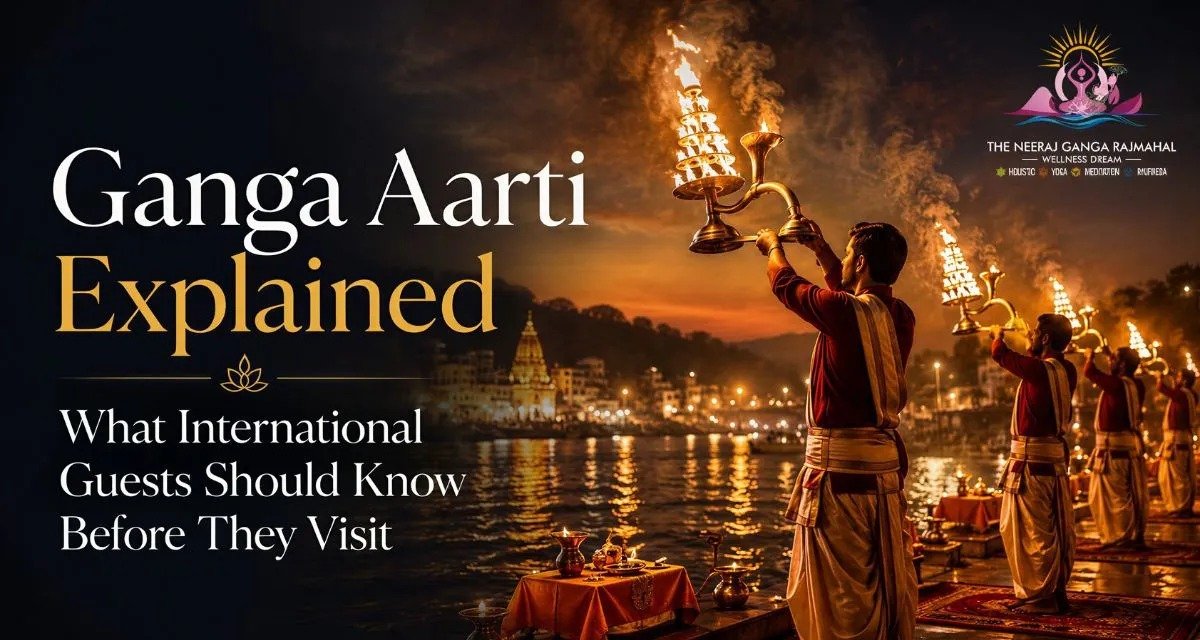
Ganga Aarti is a traditional Hindu ritual performed every evening on the banks of the Ganges to honour the river as a sacred, life-giving force. In Rishikesh, it takes place daily at sunset, most famously at Triveni Ghat and Parmarth Niketan and is open to everyone including international travellers and that too free of charge. When attending Ganga Aarti, one must dress modestly, stay respectfully quiet during the main ritual and arrive at least 30 minutes early to get a good spot.
So if you’re planning a trip to Rishikesh, chances are someone has already told you not to miss the Ganga Aarti. And they’re right to say it. It’s one of those experiences that photos genuinely don’t do justice to — the chanting, the rows of diyas floating on the water, the smell of incense drifting across the ghat as the sky turns orange. For a lot of foreign travellers, it ends up being one of the most memorable parts of the whole trip.
But if you’ve never seen anything like it before, it can also feel a little confusing in the moment — when to sit, when to stand, whether you can take photos, what’s actually going on. So this Ganga Aarti guide is meant to walk you through all of that, in plain terms, before you go.
Ganga Aarti is a devotional ritual where priests and often groups of volunteers, offer fire, flowers, incense and chanting to the river Ganga as a way of expressing gratitude and reverence. The Ganga is considered sacred in Hindu tradition, believed to purify and nourish everything it touches and the Aarti is essentially a daily thank-you to the river.
The ceremony usually involves:
It’s performed every single evening, right around sunset and it draws both locals and travellers in fairly large numbers especially during peak tourist season.
Rishikesh has a couple of well-known spots for this. Triveni Ghat is the most popular and probably the most crowded known for its scale and energy. Parmarth Niketan, right along the riverside, is another major spot and tends to have a slightly more organised, ashram-style setup with structured seating and a slightly calmer crowd.
Both are worth experiencing but if you’re staying somewhere close to the river already, you may not even need to travel far. Some properties in Rishikesh including The Neeraj Ganga Rajmahal Wellness Dream are positioned close enough to a ghat that guests can walk over easily without needing to plan around traffic or timing.
If you’re visiting from outside India and this is your first time, here’s what actually helps in the moment:
None of this is complicated but knowing it ahead of time means you can actually relax and take in the experience instead of worrying about doing something wrong.
A lot of travellers treat the Aarti as a quick stop but honestly, it’s worth giving it proper time. Getting there early, watching the ghat slowly fill up, seeing the sky change colour over the river as the chanting builds — that whole build-up is part of what makes it memorable, not just the ten minutes of the ritual itself.
It also pairs naturally with the rest of what draws people to Rishikesh in the first place. If you’re already here for yoga, Ayurveda or a slower kind of travel, the Aarti fits right into that rhythm. It’s less of a tourist attraction and more of a quiet, reflective close to the day.
If you’re planning your trip around wellness or Ayurvedic treatments as well, it’s worth reading through this Ayurvedic treatment packages for foreigners guide which covers costs and travel tips specifically for international guests.
Ganga Aarti is one of those experiences that’s simple to understand but genuinely moving to witness. For international guests, a little preparation around timing, dress and etiquette is really all it takes to enjoy it comfortably and respectfully.
This is exactly the kind of experience The Neeraj Ganga Rajmahal Wellness Dream is built around. The property sits just 5 minutes from a private Ganga Ghat where guests can take part in a curated Aarti experience without dealing with the bigger crowds and it’s also only about 10 minutes from the iconic Triveni Ghat if you’d rather see the larger, more traditional gathering. Combined with daily yoga and meditation sessions, Ayurvedic meals and a genuinely peaceful riverside setting, it gives international travellers an easy, well-supported base to experience Rishikesh’s spiritual side — Ganga Aarti included — without having to figure it all out on their own.
Also Read: Is Ayurveda Retreat Safe? A Guide for First-Time International Visitors