
One of the most fulfilling aspects of attending a wellness retreat is getting to be exposed to the many types of meditation at retreats that can help relax your mind and revitalise your spirit. The practices are carefully structured to bring back balance and develop inner peace. Unlike conventional methods of healing (such as sound healing), the various meditation forms that retreats offer give you an opportunity to heal differently.
The tools offered during each session are helpful in day-to-day life. Learning how to use guided retreat meditation techniques allows you to learn about some of the simplest (yet effective) stress reduction methods, enhanced focus techniques, and also how to get to know yourself better.
Here are some of the meditation practices that you will get the chance to explore during a retreat. Have a look at them one by one.
One of the most common practices of meditation in retreats is mindfulness. It is directed towards non-judgment of thoughts, breath, and sensations. This is a practice that can reduce stress, enhance focus, and develop a sense of calmness. Presence is a source of inner peace because participants reconnect with themselves and achieve balance by merely being present.
One of the relaxing methods of meditation is guided visualisation. Calming stories and imagery are applied by instructors as a way of relaxing and eliminating stress. Imagery of serene scenes creates a sense of positivity, innovation, and emotional well-being. It is very helpful to beginners who like to have some structure and direction in what they are learning to do to keep their busy thoughts quiet.
Loving-kindness meditation is also called Metta, which fosters emotional kindness and empathy. By repeating intentions of positivity toward others and oneself, participants shed the negativity and adopt a positive attitude. Being among the positive forms of meditation during retreats contributes to better relationships, emotional healing, and the capacity to develop a peaceful state of mind.
Seven energy centres of the body are concerned with Chakra meditation. Participants can release blockages and restore harmony using breathwork, mantras, or visualisation. This is among the intensive meditation practices brought to light in many retreats, where it provides the person with fresh energy, emotional healing, and bonding of the body, mind, and spirit.
Zen meditation focuses on stance, breathing, and observation of thoughts. It is a discipline that is practised silently, and therefore it helps to clear the mind. Retreats also involve Zazen, where an individual seeks simplicity and form. The silence it creates enables those who practise it to become insightful, patient, and clear-headed, and represents an ancient daily balance practice.
Mantra meditation is characterised by chanting some sacred words or sounds (ex, Om). This repetition in rhythm silences distractions and intensifies concentration. This is a technique applied during retreats to assist participants in seeking inner tranquilly and spirituality. It is easy and strong enough to be enjoyed by any kind of beginner and advanced hunter of mindful/meditative experiences.
The practice of Vipassana, which means insight, is one of the oldest. It is the process of being mindful of the physical experience and feelings, and thoughts. Vipassana is commonly taught with retreats where a person experiences a deep understanding of themselves and emotional rejuvenation. It is one of the most transformative retreat experiences as participants walk away with a lot of patience, acceptance, and clarity.
Transcendental meditation involves a customised mantra given by skilled teachers. It is done twice a day and generates a profound restfulness and serenity. This stress-reduction technique is introduced through retreats and offers better focus and creativity. It can be learned by everyone with a systematic practice, and so it is thought of as one of the most esteemed methods of mind-body balance.
Walking meditation is a combination of slow steps with breath awareness and mindfulness. It takes place in nature and is a way of connecting the participants with nature and relaxing the mind. The practice is common with retreats where individuals have problems sitting down. It makes ordinary walking a conscious process, which puts the participants entirely in the present.
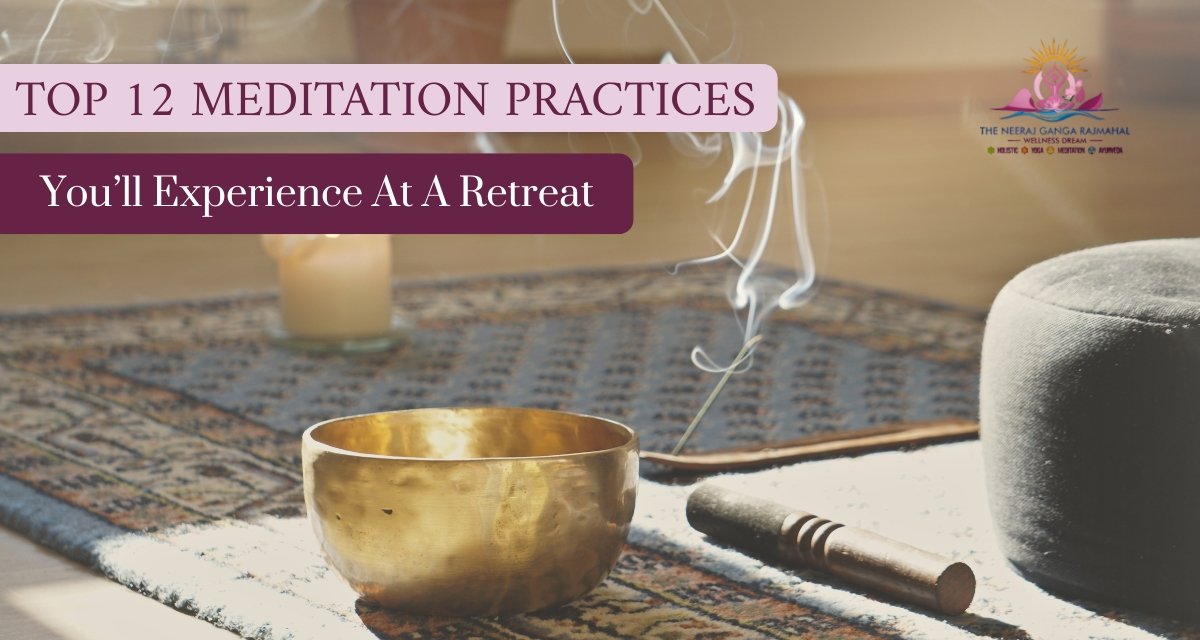
It is a practice involving vibrations of gongs, bowls, or chimes to loosen the mind and body. Retreats emphasise sound healing because it is known to relieve stress and provide extensive relaxation. Those practising this form of vibrational therapy find it to be relaxing due to the calmness of energy shifts, and it is popular among people who enjoy finding harmony with music and vibrational therapy.
Breathwork is about conscious breathing in order to stimulate the body and calm the mind. Retreats lead students through patterns that decrease anxiety, enhance concentration, and dissolve emotional blocks. It is a simple but powerful grounding practice that enhances the relationship between breath and awareness, and it fosters health and balance.
Yoga Nidra, which is also known as yogic sleep, is a guided meditation session that helps participants reach deep relaxation. Lying down exercises help relieve stress, enhance sleep, and re-energise. It is employed in retreats as a calming endpoint of the day and provides significant rest, as well as allows the participants to reconnect to their inner quietness and clarity.
The journey of meditation at retreats is really the transformation, as it provides the tools to soothe the mind and revitalise the spirit. Mindfulness and breathwork, sound healing, and Yoga Nidra: these experiences demonstrate that there can be quite diverse forms of meditation at retreats. Both practices foster balance, clarity, and emotional healing.
Through carefully instructed retreat meditation practices, participants cannot only relax throughout the retreat, but also learn practices to apply in their daily lives. These meditation practices embraced in retreats can ultimately result in you developing peace, strength, more profound self-understanding, and enduring harmony between the body, mind, and soul.
If you want to practice a wellness retreat, then you can connect with The Neeraj Ganga Rajmahal Wellness Dream. They will provide you with the best and help you have a healthy body and mind.